FSSAI releases document differentiating between cassia & true cinnamon
The Food Safety and Standards Authority of India (FSSAI) – the country's apex food regulator – recen…The Fo
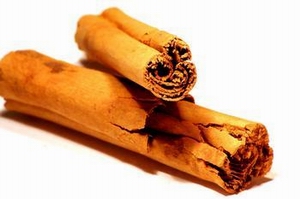 od Safety and Standards Authority of India (FSSAI) – the country's apex food regulator – recently released a document on cassia (known locally as taj) and cinnamon (locally known as dalchini). Among its contents were a brief description of coumarins and the differences between cassia and true cinnamon.
Introduction
Cassia is botanically known as Cinnamomum cassia blume; Cinnamomum burmannii; occidentalis; cassia tora; cassia obtusifolia; Cinnamomum cassia; Cinnamomum Cassia (nees) ex blume; Cinnamomum aromaticum (nees) syn; Cinnamomum burmannii (C G nees) blume and Cinnamumum loureini nees.
Cassia – which is incorrectly referred to as Ceylon cinnamon – is a member of the same family to which cinnamon (which is also known as Chinese cinnamon, Java cinnamon, Padang cassia and Saigon cinnamon) belongs. However, what cassia and cinnamon do not have in common is their coumarin content.
Although cinnamon and cassia are related, they are not obtained from the same plant. They should be treated as separate foods, both from a nutritional and a health standpoint. Scientifically, there is only one true cinnamon, which is most commonly called Ceylon cinnamon and comes from the plant Cinnamomum zeylancium.
“In fact, cassia is often misnamed and mistaken for cinnamon, and is even marketed to the consumers through retail outlets as cinnamon. Since the price of the former is far lower than that of the former, traders have the tendency to mislabel cassia as cinnamon deliberately and encash the opportunity for their gain. Cassia is often used to adulterate cinnamon,” the FSSAI document pointed out.
Coumarins
Coumarins are naturally-occurring plant components present in cassia. They are chemical compounds from the benzopyrene family. While the level of naturally-occurring coumarins in Ceylon cinnamon appears to be very small and lower than the amount that could cause health risks, the level of naturally-occurring coumarins in cassia is higher and may pose a risk if consumed in large quantities regularly.
The chemical compositions of Ceylon cinnamon and cassia are different. In contrast to cassia, Ceylon cinnamon contains eugenol and benzyl-benzoate, but no (or at the most trace amounts of) coumarin. The level of coumarin in the bark of cassia varies considerably. They depend considerably on the respective sub-species or on the climatic conditions.
“The Food Safety and Standards (Food Product Standards and Food Additives) Regulations, 2011 distinguish between cassia [the bark of trees of Cinnamomum cassia (nees) ex blume; Cinnamomum aromaticum (nees) syn; Cinnamomum burmannii (C G nees) blume, and Cinnamumum loureini nees (wherein the edible portion of the tree is the bark)] and cinnamon [the inner bark of trunks or branches of Cinnamomum zeylancium blume], and prescribe standards for both. These have been laid down in Regulations 2.9.4 (1) and 2.9.5 (1),” the FSSAI document stated.
The regulator said, “Coumarin is a natural flavouring which is found in many plants. It occurs in higher concentrations in types of cinnamon grouped together under the name cassia cinnamon.”
“A rough distinction can be made between two types of cinnamon. Ceylon cinnamon contains low levels of coumarin, which are safe. By contrast, cassia cinnamon contains high levels of coumarin and large amounts of this should not be consumed,” FSSAI added.
Differences between cinnamon and cassia
According to the FSSAI document, “Varieties of cassia have a stronger, more intense and often hotter flavour than Ceylon cinnamon, owing to the increased percentage of cinnamaldehyde, up to five or six per cent by weight. Cassia also has a significant amount of the blood-thinning phytochemical coumarin. Cinnamon and cassia sticks, however, have obvious visual markers which make them easy to identify.”
Read the full article