Improvements in cold-temp processing tech can up productivity, profits
Because cold-temperature processing is so critical to many food processing operations, improvements…Because cold-temperature processing is so critical to many food processing operations, improvements in technology can make a significant impact on productivity and profits. The bigger the gain, the stronger the multiplying effect.
That is what has been happening over the past few years in cryogenic freezing and chilling technology according to Mark DiMaggio, head of food and beverage, Linde North America. By focussing on the specific challenges of the food industry, Linde engineers have developed proprietary solutions that are more efficient in a number of ways, and which process from a few hundred to 20,000 lb of food product per hour.
“The impact of cryogenic advances can be pervasive, improving production capacity and overall competitiveness for years to come,” DiMaggio, who brings more than 20 years of food and industrial gas industry experience to his role at the Linde food team, said.
“A single immersion spiral freezer can process up to 20,000 lb of food per hour. Yet the patented design of Linde nitrogen impingement freezers still offer the highest freezing capacity per sq ft of floor space on the market,” he added. The Linde food team develops customized solutions based on either carbon dioxide (CO2) or nitrogen, depending on which cryogen is best for the process and the plant.
Streamlining Operations
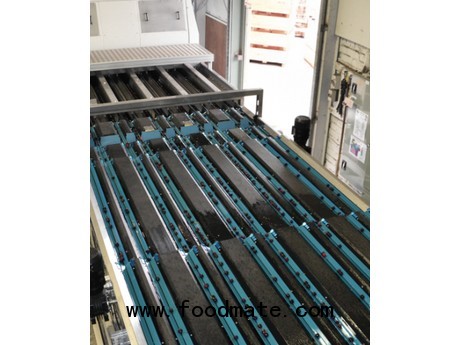
More efficient freezing operations can streamline downstream processes. For example, Linde implemented precise crust-freezing methods using a hygienic, cryogenic (CO2) tunnel freezer (pictured) to help West Liberty Foods (Mount Pleasant, IA) increase production rate and improve the quality of deli-log slicing on a new high-speed slicer. Just the right temperature and depth of crust-freeze on the log ensures the blade gets a clean “bite” for consistent slicing and even stacking.
That kind of precision can help avoid bottlenecks and eliminate product losses. Reducing losses even a few per cent can add up to hundreds of thousands of dollars a year on high-volume processes. “Likewise, Linde has introduced a new system to individually quick-freeze diced poultry and other small or fragile items that makes existing flighted freezers obsolete,” DiMaggio said.
The new Cryoline CW (Cryowave) freezer from Linde uses a patented rolling-wave action to keep IQF products separate as they freeze. It can be equipped for either liquid nitrogen or CO2.
DiMaggio said, “The state-of-the-art cryogenic solutions can reduce operating costs and help processors get more productive capacity out of the same floor space. A patent-pending airflow design on the new Cryoline XF (Crossflow) spiral freezer, for example, improves processing efficiency by 10 per cent or more compared to existing cryogenic spiral freezers. The design utilises cryogenic gases more efficiently and chills food at a more even rate across the entire belt width. The result is a more consistent product quality and reduced operating costs.”
Incorporating state-of-the-art cryogenic solutions into food processing operations can streamline operations and even fold two or more production lines into one, freeing up valuable floor space. Linde has accomplished that recently for both Tip Top Poultry (Marietta, Georgia) on an IQF diced chicken line, and at West Liberty Foods in its ham-log slicing operations.
“For marinated products in particular, such as for example chicken breasts, cryogenic processing helps lock in moisture, retain shape after pressing and lock-in value. If you think about it, moisture losses mean not only lost profit due to lower packing weight, but a loss of the quality and flavor that keeps customers coming back,” DiMaggio said. In addition, attention to food quality and safety is increasingly making hygienic design a differentiating factor in equipment decisions.
While there are physical limits to how quickly food can be chilled or frozen, recent advances are improving quality, efficiency and productivity, ensuring new cryogenic technology will play an even more pivotal role as older freezing equipment is outmoded and replaced.
The Linde food team performs in-plant assessments and works with processors to develop optimal process solutions.