Keep the factory safe: take the people out
Food factories of the future should keep people away from the manufacturing environment to reduce th…Food factories of the future should keep people away from the manufacturing environment to reduce the risk of contamination by pathogen transfer by humans, according to a leading hygiene expert.
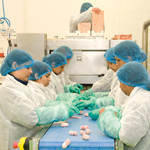
Giving his "vision of the future" at a recent conference on improving efficiency in manufacture, Campden BRI's head of food hygiene, Dr John Holah, argued that, since many incidents of cross-contamination involved people, the solution was to remove them from the equation.
By taking people away from the processing environment, the risk of human contamination would be eliminated, he said. But, at the same time, it would make it possible to introduce hygiene conditions that would not be possible were people to be present. For example, by altering the temperature or modifying the atmosphere in the production environment, such as introducing ozone, the growth of dangerous pathogens could be inhibited. However, many of these techniques could not be safely used if people were present.
Cross-contamination
"We are seeing more and more recalls and HACCP [hazard analysis critical control point methodologies] is seen to be failing since, in most cases we have cross-contamination in a process after its thermal treatment," said Holah. This was despite progressive attempts to minimise the volume within high-risk factory areas and the introduction of measures such as overpressure to stop the ingress of pathogens.
Microbial load
People can be a significant source of contamination from their hands and through coughing and sneezing, said Holah. "The harder we work, the more skin particles we shed," he added. "So, fewer people, fewer pathogens. If we could take people out it would reduce the microbial load going into that area We can change the whole process environment by not having people there."
While automation would remove the people risk, it wouldn't entirely eliminate cross-contamination, said Holah, since the very process of handling foods meant that conveyor and robotic gripper surfaces come into contact with food and this is probably the biggest potential source of cross-contamination.
The solution, he suggested, might be to redesign operations to minimise the number of contact points and by, for example, regularly disinfecting robotic grippers and contact surfaces, using specialised techniques to kill pathogens. For example, electric shocks, localised heating or super chilling, ozone atmospheres and the use of adhesive/repellent surfaces for pathogens. Many of these would not be possible if people were present.