Polyols for calorie and sugar reduction
The drive to curb the obesity epidemic seems to have moderated approaches to sugar and fat reduction…The drive to curb the obesity epidemic seems to have moderated approaches to sugar and fat reduction in product development. Especially in categories where serving sizes can be large, replacement of all of the sugar and/or fat often leads to products that are not appealing to the consumer.
A much more moderate approach—the reduction of calories through partial fat replacement and a 30% to 50% reduction in sugar—has led to more consumer-acceptable products, which, like 100-calorie packs, have a better chance of acceptance for weight management.
Polyols: novel sugar replacements
Polyols are a group of sugar-replacement ingredients with a great deal of utility in this trend. They have become widely accepted, especially in confectionery, where serving sizes are smaller and sugar-free has become the norm. Consumers expect their chewing gums and breath-fresheners to be sugar-free, and parents encourage their children to chew these products due their cariogenic or cariostatic benefits.
Polyols have functional benefits in these products, as well. They are excellent plasticizers, keeping the gum soft and pliable over time, and they also work well with high-potency sweeteners in establishing the sweetness and flavor profiles that are now expected in chewing gums. In hard-boiled candies, they are the majority of the candy piece, establishing the structure and maintaining that structure through the shelf-life of the candy, but also providing, in combination with other sweeteners, the sweetness and flavor profile.
In other confections, such as jellies, gummies, taffies, fondants and caramels, some polyols are integral in establishing the crystalline or semi-crystalline structure that defines a particular confection, while other polyols serve to control the rate of crystallinity for shelf-life purposes.
polyols
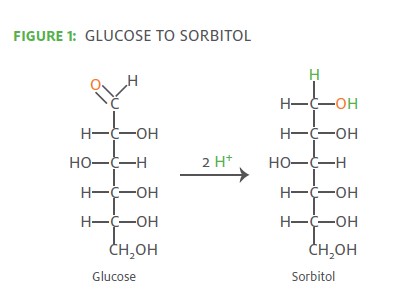
Polyols serve these same purposes and more in nutritional bars, baked goods, ice creams and other products in many ways. First of all, confectionery products are often a defining part of products within these categories, serving as inclusions, variegates, toppings, icings, etc. Secondly, the same properties as described for confectioneries also apply to baked goods, dairy products, nutritional bars and other categories. Polyols are products created by the hydrogenation of sugars (Figure 1), and they affect polymeric structures in much the same way as their originating nutritional sugars, and often bring more beneficial properties into play, as well.