Highly hazardous pesticides should be phased out in developing countries
The tragic incident in Bihar, India, where 23 school children died after eating a school meal contam…The tragic incident in Bihar,
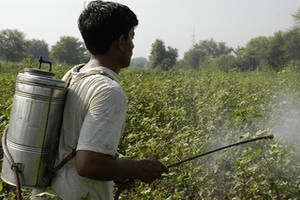 India, where 23 school children died after eating a school meal contaminated with monocrotophos, is an important reminder to speed up the withdrawal of highly hazardous pesticides from markets in developing countries, the UN Food and Agriculture Organization (FAO) said today.
Monocrotophos is an organophosphorus pesticide that is considered highly hazardous by FAO and the World Health Organization. Experience in many developing countries shows that the distribution and use of such highly toxic products very often poses a serious risk to human health and the environment.
The incident in Bihar underscores that secure storage of pesticide products and safe disposal of empty pesticide containers are risk reduction measures which are just as crucial as more prominent field-oriented steps like wearing proper protective masks and clothing.
The entire distribution and disposal cycle for highly hazardous pesticides carries significant risks. Safeguards are difficult to ensure in many countries.
Among international organizations, including FAO, the World Health Organization and the World Bank, there is consensus that highly hazardous products should not be available to small scale farmers who lack knowledge and the proper sprayers, protective gear and storage facilities to manage such products appropriately.
FAO therefore recommends that governments in developing countries should speed up the withdrawal of highly hazardous pesticides from their markets.
Non-chemical and less toxic alternatives are available, and in many cases Integrated Pest Management can provide adequate pest management that is more sustainable and reduces the use of pesticides.
The International Code of Conduct on Pesticide Management, adopted by FAO member countries, establishes voluntary standards of conduct for all public and private entities involved in pesticide management. This Code has been broadly accepted as the main reference for responsible pesticide management.
The Code states that prohibiting the importation, distribution, sale and purchase of highly hazardous pesticides may be considered if, based on risk assessment, risk mitigation measures or good marketing practices, are insufficient to ensure that the product can be handled without unacceptable risk to humans and the environment.
For monocrotophos, many governments have concluded that prohibition is the only effective option to prevent harm to people and the environment. This pesticide is prohibited in Australia, China, the European Union and the United States, and in many countries in Africa, Asia and Latin America.