Heart Foundation challenges Gillespie’s new book ‘Toxic Oil’ message
Australia’s National Heart Foundation has challenged a new book about the ‘dangers’ of eating vegeta…
 Australia’s National Heart Foundation has challenged a new book about the ‘dangers’ of eating vegetable oils.
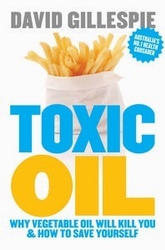
The book, ‘Toxic Oil’, published today by Penguin Books Australia by lawyer David Gillespie claims that eating seed oils is bad for health, despite advice to the contrary given by health agencies and government.
Gillespie writes that the human body has not evolved to digest polyunsaturated seed oils and that humans should instead be eating ‘more natural’ saturated and monounsaturated fats from animal and other sources.
Gillespie’s previous books, ‘Sweet Poison: why sugar makes us fat’ and ‘Big Fat Lies: How the diet industry is making you sick, fat & poor’, were both bestsellers, and attracted supporters and critics from within the food industry and nutrition health sectors.
The Heart Foundation has strongly refuted the claims about the negative health effects of seed oils.
“There is no single cause of chronic diseases, including heart disease,” a statement issued today by the Heart Foundation said. “However there is scientific consensus that replacing saturated fat with unsaturated fat, in particular polyunsaturated fat, reduces your risk of heart disease”. The organisation said it was dangerous, misleading and wrong to say otherwise.
“The considerable weight of evidence for the recommendation of a dietary shift from saturated fats to unsaturated fats for positive health effects is insurmountable,” The Heart foundation said. “This position is also held by the world’s leading health organisations, such as World Health Organisation, British Heart Foundation and American Heart Association. In addition leading professional and government organisations, such as the Dietitians Association of Australia, National Health and Medical Research Council (NHMRC) and National Health Service UK (NHS UK) support this dietary transition.”
There is consistent research to suggest that polyunsaturated fats reduce ‘bad’ cholesterol in the blood, and increase the ‘good’ cholesterol, which helps to lower the risk of heart disease.
The Heart foundation recommends a balanced diet eating a variety of foods, including fruit, vegetables, wholegrains, lean meats, oily fish, low-fat dairy, nuts, seeds, legumes and oils. “A healthy diet is just that – balanced,” they said. “It does not involve cutting out any food group entirely.”