Trade body attempts to clean up bioplastic communication
The Environmental Communications Guide for Bioplastics (ECG) aims at safeguarding good communication…The Environmental Communications Guide for Bioplastics (ECG) aims at safeguarding good communication along the entire value chain and avoiding vague and general claims.
It outlines good and bad examples of relevant claims in environmental communications.
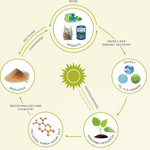
“Biobased-claims should be backed up by sound measurements based on approved standards (CEN/ ASTM/ISO) and, ideally, third party certification.
“They can either be made by indicating a percentage of the biobased mass content or the biobased carbon content share of a material/product,” said the guide from the trade association.
Accountability is key
The guide said accountability is key when firms make environmental claims and sound comparisons need to be made comparing goods or services of the same product category.
“There is a need for more information on how to communicate as there is still unawareness of greenwashing and certain marketing terms,” Kristy-Barbara Lange, head of communication at European Bioplastics, told FoodProductionDaily.com.
“It takes us to another level and is about doing something to safeguard our reputation and set a benchmark for the industry.”
NatureWorks, DuPont, Innovia and Braskem were some of the companies involved in creating the report.
When asked if the industry could disregard a report that is not binding, she added: “They might ignore it but we are in a new communications age and if people ignore the guidelines they will be overtaken by their competitors, as it is a guide and a point of reference.
“It won’t be a complete switch right away, it will be a gradual change from vague terms, to slightly proven to fully proven, we understand there is a compromise on that.”
The report highlights fully or partly biobased and non-biodegradable polymers, like biobased PE, PET or PP, and such as PA, PTT or TPC-ET (technical performance polymers), polymers that are biobased and biodegradable, including PLA and PHA and polymers that are based on fossil resources and are fully biodegradable, such as PBAT or PBS.
Industry debate
Lange added the group hope it will be received widely and create an industry debate, considering members had differing opinions on some of the terms.
“We expect there to be questions from producers and industry and we are open to recommendations and examples of how we arrived at the deductions made in the report.
“This is definitely a topic there is interest in and it is needed to raise awareness of the rules and main points of industry.”
The group are holding a half-day workshop on 5 November in Berlin to bring the issue closer to packaging engineers and communications.