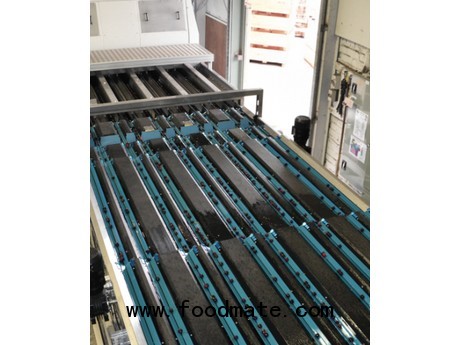
New wash-off labels bring sustainability benefits
Dutch-based Avery Dennison said that its Fasson labels provided converters with a simple and immedia…Dutch-based Avery Dennison said that its Fasson labels provided converters with a simple and immediate replacement for existing wet glue products, with a reduced environmental impact.
Asked what technical challenges Avery Dennison overcame to produce the labels, Rob Verbruggen told FoodProductionDaily.com: “The basis for the design is a multi-layered label comprising film layers that expand at different rates (at the same temperature) in a hot washer.”
This meant the labels curled for easy removal, Verbruggen explained, where they are designed to allow for ‘no label’ look decoration of returnable beer bottles. Avery Dennison said they were designed to boost the brand image of premium beers and support complex label shapes.
Suitable for body and/or neck labeling of light and dark containers, the labels can be used for bottled water in glass and large (gallon-sized) containers of juice and smoothies in recyclable PET bottles.
When used with glass bottles, adhesive and inks remain on labels, which means that they do not contaminate washer water. For PET bottles, the labels separate from PET chips during recycling (in a hot alkaline solution) due to a difference in density, allowing for 100% bottle recycling.
The wash-off labels have a multi-layer construction (a polypropylene film coated with a proprietary wash-off adhesive, topped with a PET liner), and Avery Dennison claimed they left no adhesive residues on bottles or washers.
The labels wash off from 65C in water – as opposed to the industry average of 80C, with associated energy savings – are resistant to UV and are designed to work well in tropical and hot environments.
Verbruggen told this publication that the lower hot water wash-off temperature was “one of the main advantages” of the new label range, as was the fact that no adaptations were needed to existing operating systems.
In terms of geography, Verbruggen predicted that the bigger bottle returnable markets – Europe, Asia and South America – were likely to drive uptake for the Fasson range, since the US had less of a returnable bottle market.