Food Safety Rules Stalled at White House as Outbreaks Continue
A multistate outbreak of Listeria last year led to 33 deaths, linked to whole cantaloupes from a far…A multistate outbreak of Listeria last year led to 33 deaths, linked to whole cantaloupes from a farm in Southeastern Colorado. Since then, the Centers for Disease Control and Prevention (CDC) has reported hundreds of other foodborne illnesses that have resulted in hospitalizations for dozens of Americans in several states.
Now, the nation is grappling with a nationwide outbreak of Salmonella linked to peanut butter.
Sandy Eskin, project director of the Food Safety Campaign at the Pew Health Group, said the outbreaks underscore the need to finalize food-safety rules as soon as possible under a federal law that was designed to better protect the nation's food supply.
The White House's Office of Management and Budget (OMB) has been sitting on draft regulations for nearly a year, drawing criticism from food-safety advocates over delays in the implementation of the Food Safety Modernization Act (FSMA).
In a lawsuit filed over the summer against OMB and the U.S. Food and Drug Administration (FDA), the Center for Food Safety and Center for Environmental Health claim FDA has missed hundreds of deadlines, including the making or so-called promulgation of seven major food-safety regulations.
"The numerous preventative measures contained in FSMA required to be carried by FDA is critical, as they would dramatically reduce the number of illnesses caused by foodborne pathogens in the U.S., as well as reduce the economic healthcare burden of treating these problems," asserts the lawsuit, which was filed in the U.S. District Court for the Northern District of California. "In an era of seeking ways to lower healthcare costs, prevention of foodborne illness and outbreaks should be paramount."
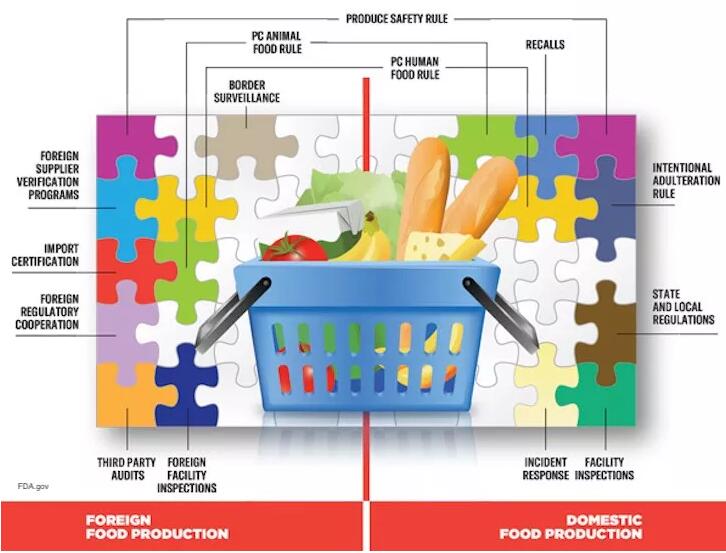
Some of the regulations include ensuring the independence of third-party audits, requiring food processors to identify hazards that may occur in a facility, establishing standards for the safe production and harvesting of fruits and vegetables and prevention against intentional contamination of food.
"Practically speaking we just want to encourage FDA to follow the statutory mandate of promulgating these regulations in a timely fashion," said Page Tomaselli, staff attorney with the Center for Food Safety.
But regulatory lawyer Ricardo Carvajal of Hyman, Phelps & McNamara PC indicated in a blog the case could last months if not years because such litigation under the Administrative Procedure Act is "typically protracted."
OMB didn't respond to an emailed request for comment on the lawsuit, and the FDA declined to comment on the specific litigation. The U.S. Department of Justice hasn't filed an answer yet in the case, which is scheduled for a status conference with the judge on Nov. 7, Tomaselli said.
"In general I can say that publishing the FSMA rules is a priority for the agency," FDA Spokeswoman Carla Daniels said in emailed comments. "While the rule-making process can be complex and demanding, it will eventually provide for a framework that will have an enormous impact in modernizing the food safety system."
Of the seven food-safety regulations cited in the lawsuit, FDA sent several to OMB for review in November and December 2011. The Center for Food Safety and Center for Environmental Health maintain the government agency still hasn't send the rules back to the FDA in spite of a 90-day deadline and the public record at OMB corroborates those assertions.
Deadlines imposed by FSMA clearly have been missed. For instance, one rule designed to help improve the safety of food that is imported into the U.S. should have been finalized in early January. Instead, the proposed rule is still sitting at OMB.
The process is painstakingly slow. Even after OMB sends the proposed regulation back to FDA, it will have to go through a public comment period, the food-safety agency will review the comments and the FDA's regulation will require final approval from the White House before it can take effect.
Industry lawyers say it could take a year or longer for the food-safety regulations to be finalized and actually take effect.
"We haven't really got a good explanation for why they [regulations] haven't been released yet," said Chris Waldrop, director of the Food Policy Institute with the Consumer Federation of America.
Some lawyers opine that an administration holds off on such proposals during an election year.
Meantime, FDA declares it's doing plenty to carry out the biggest food-safety reform in decades. Since President Obama signed FSMA into law on Jan. 4, 2011,the food-safety agency has published three final rules plus nine draft and final guidance documents, submitted five reports to Congress and carried out pilot studies among other tasks, according to an FDA official during a speech last month at the 2012 Science Writer's Symposium.
Michael Taylor, FDA Deputy Commissioner for Foods, also noted the agency is close to completing some additional proposed safety rules. Full implementation of the law will take years, and Taylor said FDA has "worked hard to prioritize our efforts and to deliver on both immediate and longer term FSMA mandates."
Still, FDA critics don't think the agency is working hard enough.
In their lawsuit, the Center for Food Safety and Center for Environmental Health contend the agency's failure to meet statutory deadlines "is an abdication of the agency's fundamental responsibilities" that "is putting millions of lives at risk from contracting foodborne illnesses."