Food allergies: progress in setting ‘tolerable risk’ values
“Some progress” is being made to develop international reference values for food allergens to minimi…“Some progress” is being made to develop international reference values for food allergens to minimise the risk of allergic reactions, said the Food Standard Agency’s (FSA) chief scientist Dr Andrew Wadge.
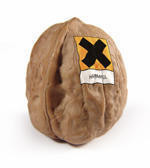
His annual report, published last month, showed more than twice as many people are being hospitalised due to food allergies as they were a decade ago.
The FSA’s General Advisory Committee on Science (GACS) was told yesterday (Wednesday, October 31), that the absence of action levels for allergen cross contamination had been due to a lack of population data required to find out the minimum doses that caused an allergic reaction.
This data is needed to set internationally agreed reference values to define a tolerable risk to the allergic population.
“With regard to allergies, there are enormous implications for the food industry and it is a big issue for consumers who either have allergies or allergies within the family and the choices they can make,” said Wadge.
“The ultimate aim, and some progress is made here, is to set action levels to help both industry and consumers.”
No agreed limits
There are presently no internationally agreed limits for the unintentional presence of allergens in pre-packed foods – resulting in “lack of consistency and the perceived overuse of precautionary labelling such as ‘may contain’, Wadge wrote in his report to the committee.
He added that a workshop was held last month with the food industry, the EU and clinicians to discuss the advances made in developing reference values for the listed allergens.
“This development will provide the scientific evidence to enable the food industry to improve allergen management strategies and provide consistency for consumers on precautionary labelling,” it stated.
He added that a peer review paper on the matter was currently being drafted and would be published next year.
Tip of the iceberg
With regard to the number of hospital admissions, Wadge wrote in his annual report that 8,036 people were hospitalised in 2010-2011 while in 2001-2002 the figure was 3,825.
However, he warned that these figures were likely to be the tip of the iceberg.
“Many food allergic reactions are treated in accident and emergency or areself-managed (with patients not being hospitalised) and are therefore not included in these statistics,” he wrote in the report.
“Also hospitalisation figures do not include asthmatic reactions thought to be induced by food allergic reactions. So the true burden of food allergy is estimated to be significantly higher than the hospitalisation figures might otherwise suggest,”
One of the major rises in hospital admissions since 2001 has been due to cases of anaphylactic shock, which has almost doubled from 763 to 1419.
Anaphylactic reactions are caused by the sudden release of chemicals, including histamine, from cells in the blood and tissues where they are stored.
Food allergies in numbers
• 8,036 − people hospitalised in 2010-2011 due to food allergies
• 3,825 – people hospitalised in 2001-2002
• 1419 − hospital admissions due to anaphylactic shock in 2011
• 763 − hospital admissions due to anaphylactic shock in 2001
